
Tankless Water Heaters In Colorado
Reduce Your Home's Energy Consumption
If you’re tired of running out of hot water during back-to-back showers or watching your utility bills climb while a storage tank reheats water you’re not using, a tankless water heater could transform how your home delivers hot water. TempTrust specializes in expert tankless water heater installation, replacement, and service throughout Colorado, helping homeowners enjoy endless hot water while reducing energy consumption and reclaiming valuable utility space. Our certified technicians design and install tankless systems sized perfectly for your household’s specific needs.
The Advantages of Going Tankless
Homeowners who switch to tankless water heating typically discover benefits that extend well beyond energy savings:
- Continuous hot water supply means no more cold-shower surprises when multiple family members shower in succession or when laundry and dishwashing happen simultaneously.
- Properly sized systems handle realistic household demand without interruption.
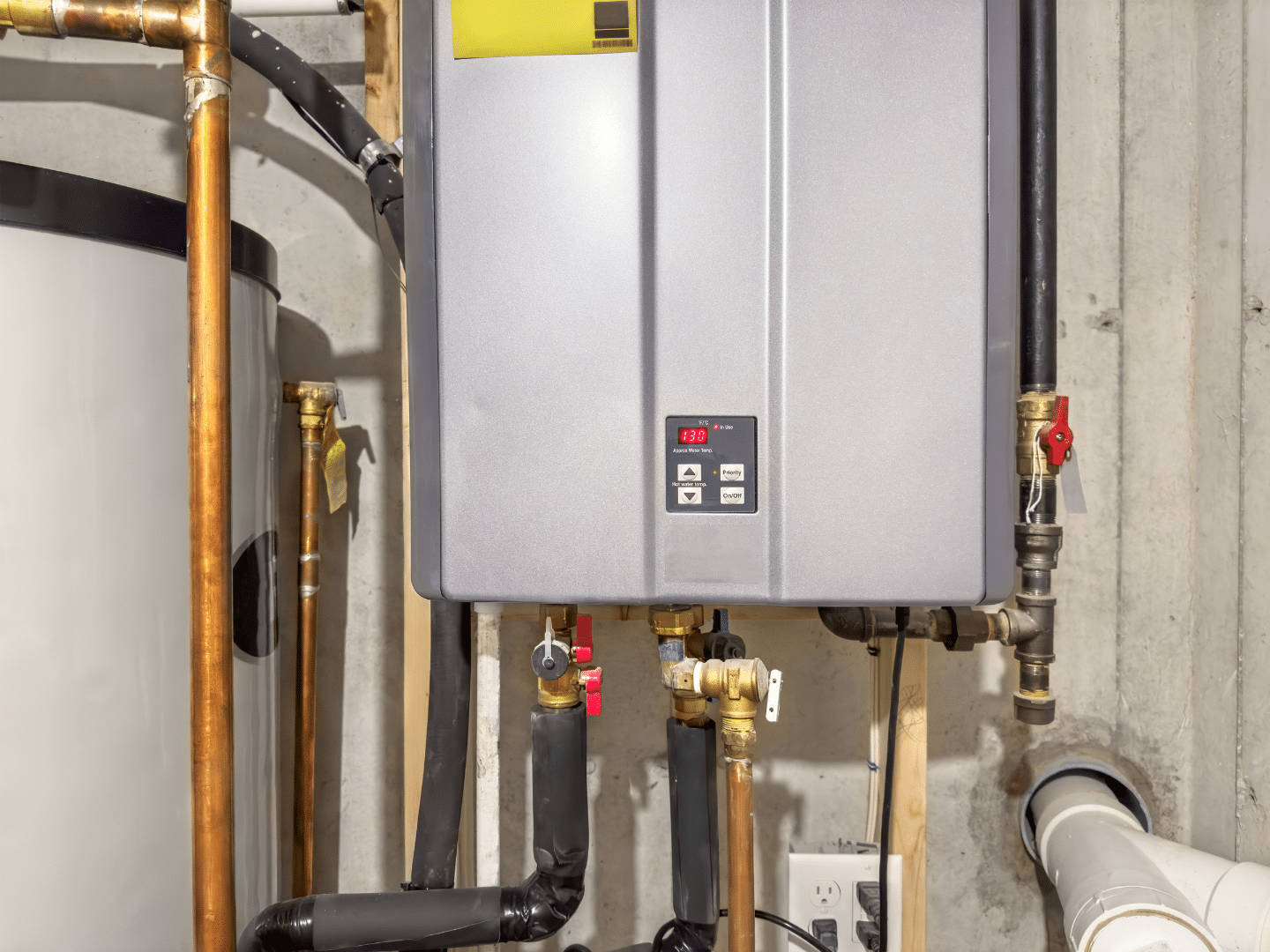
- Compact footprint frees up significant space compared to bulky storage tanks. Wall-mounted units consume only a fraction of the room required for a conventional water heater, opening up storage opportunities in basements, garages, and utility closets.
- Extended service life delivers value that justifies the investment over time. While storage tanks typically last 8 to 12 years before tank failure or rust forces replacement, tankless units commonly serve homes for 20 years or more with proper maintenance.
- Reduced environmental impact comes from lower energy consumption and the elimination of large tank disposal at end-of-life. Many high-efficiency models qualify for ENERGY STAR certification and associated incentive programs.
- Lower risk of catastrophic leaks eliminates the threat of a 50-gallon tank suddenly rupturing and flooding your basement. Tankless units contain only the small volume of water actively flowing through the heat exchanger.
- Better water quality results from not storing heated water for extended periods, which can promote sediment buildup and bacterial growth in traditional tanks.
If any of these sound familiar, an evaluation from our team can help you determine whether your boiler has useful life remaining or whether planning a replacement makes more sense.
Tankless Configurations To Match Your Home
Not every tankless installation looks the same, and the right configuration depends on your household’s specific patterns and infrastructure.
- Whole-Home Gas Tankless Systems typically serve as the primary hot water source for an entire home, delivering high flow rates suitable for simultaneous demands. Natural gas and propane models are available, with condensing options achieving the highest efficiency ratings.
- Electric Tankless Systems work well for homes without gas service or for specific applications where gas isn't practical. Larger whole-home electric units require substantial electrical service capacity, so we evaluate your panel before recommending this approach.
- Point-of-Use Units install close to specific fixtures like remote bathrooms or kitchen sinks, eliminating the wait time for hot water to travel through long pipe runs. These compact units complement a primary system or serve as standalone solutions for guest spaces, additions, or wet bars.
- Hybrid Configurations pair a tankless unit with a small buffer tank, combining the endless capacity of tankless technology with instantaneous delivery characteristics that some homeowners prefer. These systems also accommodate recirculation loops for nearly instant hot water at distant fixtures.
Is Tankless Right for Your Home?

Tankless systems work exceptionally well for many homes, but they aren't universally the best choice. Factors that favor a tankless installation include households frequently running out of hot water with their current system, homes where utility space is at a premium, families committed to long-term occupancy who will recoup the investment over time, properties with adequate gas supply and venting access, and homeowners prioritizing energy efficiency and reduced environmental impact.

Conversely, certain situations may warrant additional consideration before switching, including very low hot water demand where standby losses aren't significant, electrical service limitations for electric models, plans to sell the property within a few years, and unique gas supply or venting constraints that complicate installation.

Our team provides honest assessments that consider your specific situation rather than pushing one approach over another. Sometimes a quality high-efficiency storage tank truly is the better choice, and we'll tell you when that's the case.

Installation Considerations Done Right
A successful tankless installation involves more variables than swapping out a storage tank. Critical factors include:
Properly Sized Equipment
We calculate your home’s peak hot water demand based on fixture flow rates and realistic simultaneous usage scenarios. Undersizing leads to unsatisfying performance, while oversizing wastes money on unnecessary capacity.
Gas Supply Capacity
Tankless units typically require significantly more gas input than storage water heaters during operation. We verify your gas line size and meter capacity can support the new equipment, upgrading if necessary.
Venting Configuration
Condensing units use plastic venting that’s relatively easy to route, while non-condensing models require stainless steel venting designed for higher exhaust temperatures. We evaluate venting paths during the planning phase.
Water Quality Considerations
Colorado’s hard water creates scaling concerns inside tankless heat exchangers. Where appropriate, we recommend water softening or scale prevention measures that protect your investment and maintain warranty coverage.
Electrical Requirement
Even gas-fired tankless units need electrical service for controls and ignition. We ensure proper circuits and grounding during installation.
Condensate Management
High-efficiency condensing models produce acidic condensate that requires proper drainage and sometimes neutralization. We address these details correctly during installation.
Service and Maintenance For Existing Units
Already have a tankless water heater that needs attention? Our team services tankless systems from all major manufacturers. Common service needs include annual flushing and descaling to remove mineral buildup, ignition and combustion system service, error code diagnosis and repair, recirculation pump service and adjustment, and complete system evaluations for older units. Regular professional maintenance protects manufacturer warranty coverage and significantly extends equipment life.
Frequently Asked Questions
How much hot water can a tankless unit really produce?
Properly sized whole-home tankless units typically deliver 5 to 11 gallons per minute of hot water continuously. That capacity comfortably supports multiple simultaneous demands in most homes, such as a shower running while the dishwasher fills. Sizing matters significantly here, which is why we calculate peak demand based on your specific home and family.
Will I need to upgrade my gas line to install a tankless system?
Sometimes yes, sometimes no. Tankless units require higher gas input rates than storage tanks, but many homes already have adequate gas supply for the upgrade. We evaluate your existing gas service during the consultation and clearly identify any required modifications in our proposal, so there are no surprises.
How does cold incoming water temperature affect performance?
Colorado’s groundwater enters homes at relatively cool temperatures, especially during winter months. This affects the temperature rise a tankless unit must produce, which impacts maximum flow rates. We account for these realistic conditions when sizing your system rather than relying on optimistic manufacturer specifications.
Do tankless water heaters require special maintenance?
Yes. Annual flushing with a descaling solution removes mineral buildup that accumulates inside the heat exchanger, particularly in areas with hard water. This maintenance is essential for maintaining performance, efficiency, and warranty coverage. Our service plans handle this work on schedule so you don’t have to worry about it.
Can a tankless unit work with a recirculation system for instant hot water?
Yes. Many modern tankless units include built-in recirculation features or work with external recirculation pumps to provide nearly instant hot water at distant fixtures. We design these systems to balance convenience with efficiency, since constant recirculation eliminates some of the energy savings tankless technology provides.
What happens during a power outage?
Gas-fired tankless units require electricity to operate their controls and ignition systems, so they don’t produce hot water during power outages. Battery backup solutions are available for homes where this concern is significant, and some homeowners install whole-home generators that maintain water heating during extended outages.
What We Do
Upgrade Your Hot Water Experience with TempTrust
Switching to a tankless water heater is one of the most impactful upgrades you can make for your home’s comfort, efficiency, and long-term value. Whether you’re replacing a failing storage tank or planning a new installation, TempTrust delivers expert design and installation that ensures your tankless system performs flawlessly for decades.
Contact us today to experience truly endless hot water backed by licensed expertise, transparent pricing, and the reliable on-time service that makes TempTrust Colorado’s trusted home comfort partner.